

Search

Occupational Safety & Health

A Human-Centric Approach to a Safe and Healthy Work Environment

TCC Group Holdings applies a human-centric principle to occupational safety and health management and has made a Total Care Commitment to build a safe and healthy workplace.

TCC Group Holdings has established an Occupational Safety and Health Committee, which meets quarterly to discuss employee safety and health issues. Alongside regular monitoring of the workplace environment, TCC Group Holdings passes external third-party audits each year for its ISO 45001 occupational health and safety management system and its ISO 14001 environmental management system. The certificate for the operational headquarters is valid until December 22, 2026. The cement plant certificates are valid until September 22, 2026 (Hoping Plant) and August 15, 2028 (Suao Plant). The product plant certificate is valid until May 19, 2027.

For internal safety management, the Occupational Safety and Health Office at the operational headquarters conducts on-site inspections on a regular basis to evaluate safety and health performance at each plant. To raise safety awareness across the workforce, designated staff in each unit receive internal auditor qualification training under ISO 45001 and ISO 14001.

To strengthen risk control, TCC Group Holdings has introduced AI recognition technology from 2025, installing smart cameras in high-risk work areas at each plant. TCC Group Holdings will also implement an occupational injury and major incident reporting system, providing a channel for reporting abnormal events and a mechanism for investigating and analyzing occupational incident cases.
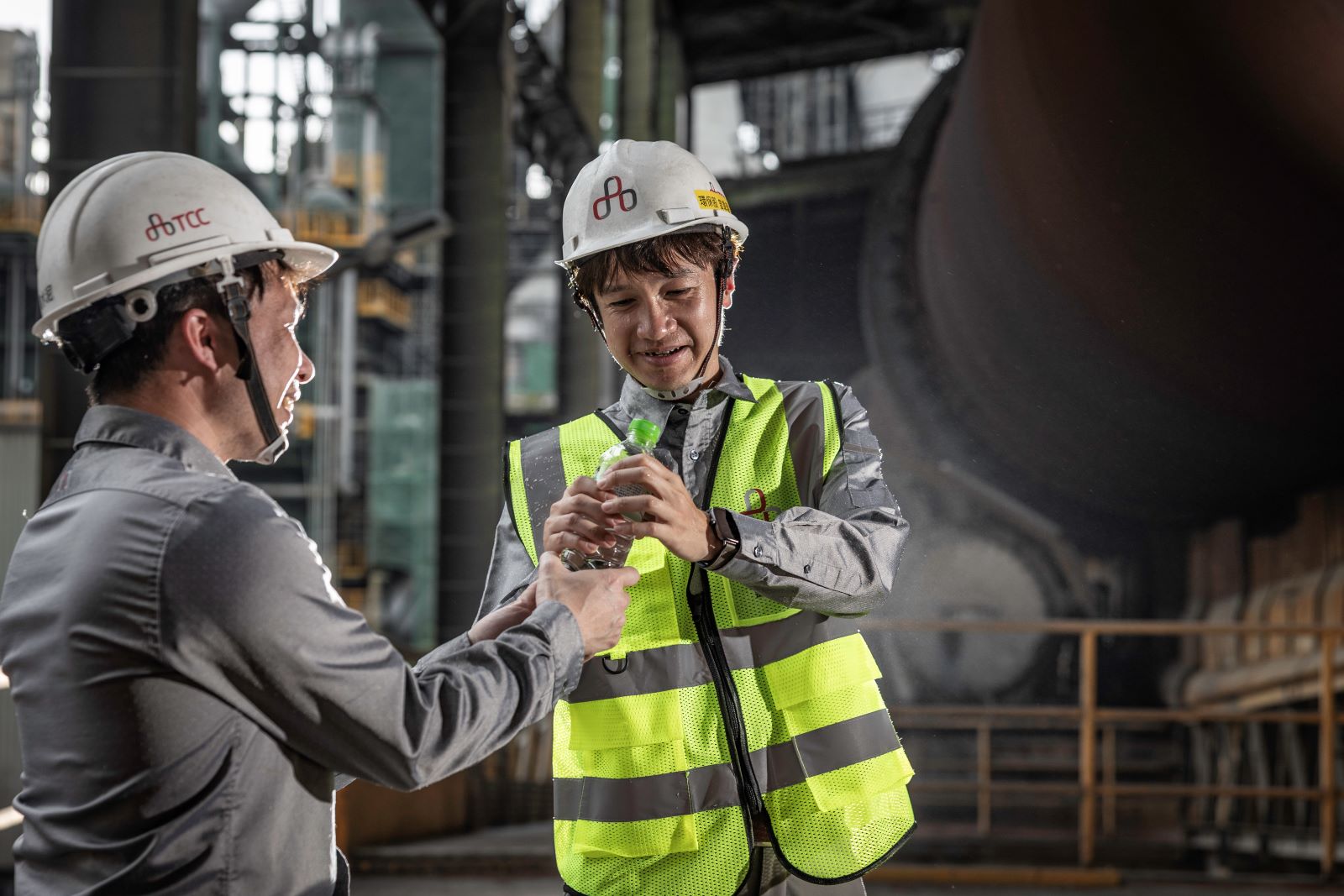
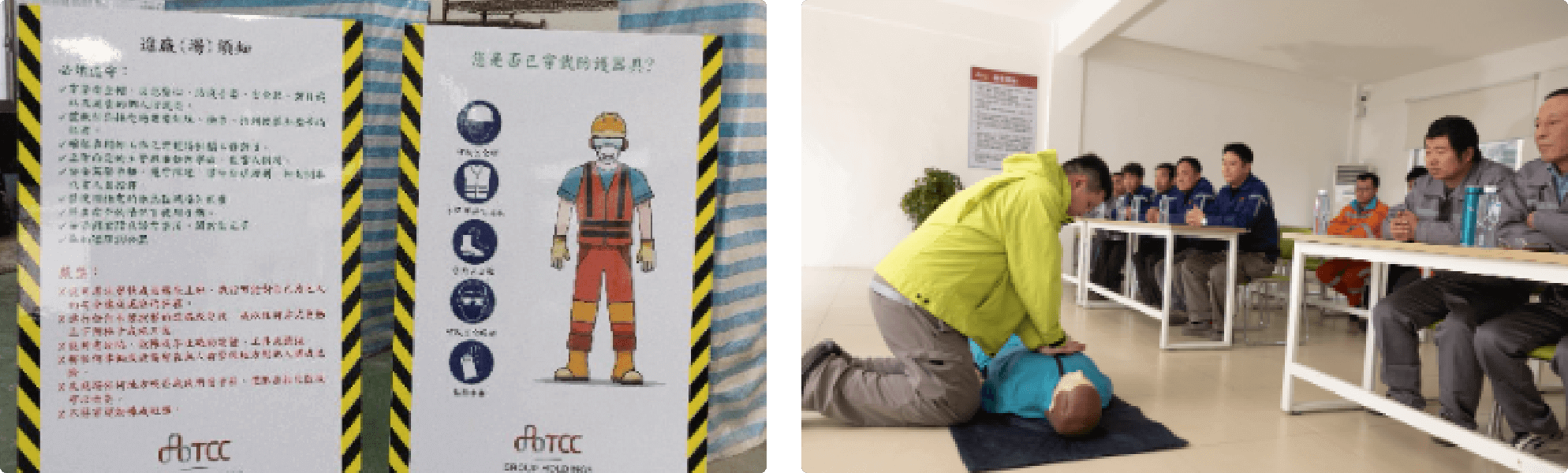
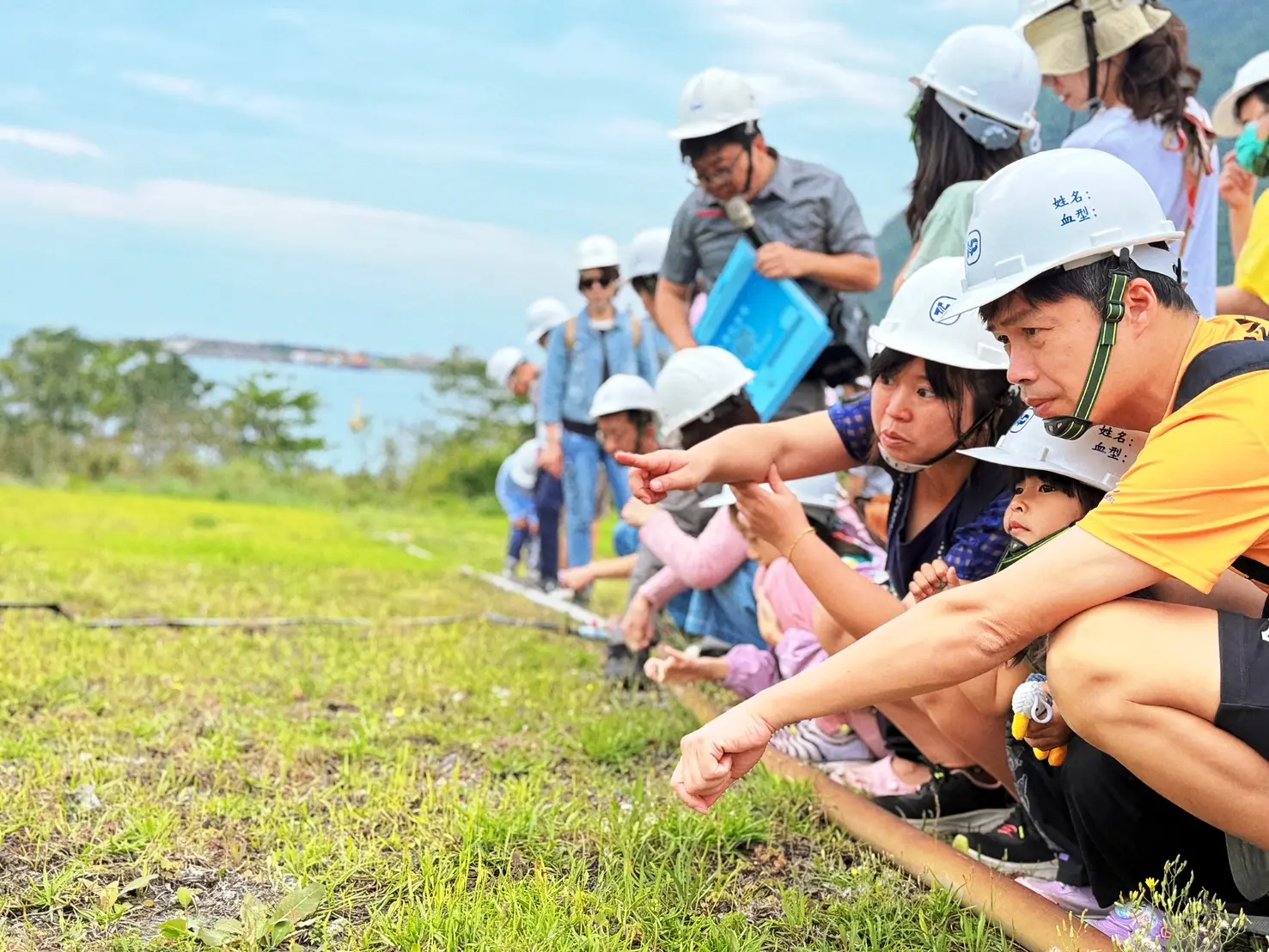
Workers wearing safety helmets and personal protective equipment at a TCC Group Holdings plant

Policy

The Internal Control Policies for Occupational Safety and Health Management of TCC Group Holdings apply to all Group employees, outsourced workers, and contractors, with zero occupational injuries as the target. The safety regulations include the Occupational Safety and Health Policy Statement, the Occupational Safety and Health Management Regulations, the Occupational Safety and Health Management Plan, and the Occupational Safety and Health Code of Practice, and a safety culture is promoted through behavior-based management. CIMPOR and OYAK Cement set out employee occupational safety and health requirements in their Integrated Management System Policy.

Coverage

Icon representing employees
100% of employees
Icon representing suppliers
Suppliers
Icon representing contractors
Contractors

Occupational Safety and Health Committee

  • Monthly TCC Group Holdings meetings, chaired by the Chairman, open with occupational safety and health performance and improvement plans for the month.
  • The occupational safety and health management system of TCC Group Holdings includes an Occupational Safety and Health Office at each site, as required by law. Sites in Taiwan hold quarterly meetings and plants in Mainland China meet monthly. These meetings are led by the Chief Commissioner, who is the person in charge of the workplace or a designated deputy, and they track progress, review improvements, decide occupational safety and health matters, and report to the operational headquarters.
  • Safety Improvement Promotion Teams were formed at each plant in 2025 to prevent occupational accidents.
  • Group Occupational Safety and Health Meetings are held monthly, with the Occupational Safety and Health Office at the operational headquarters overseeing implementation at each plant. Safety awareness is also reinforced through disciplinary measures approved by the President.
  • For CIMPOR and OYAK Cement, the CIMPOR Group Board of Directors supervises the operation of the Occupational Safety and Health Committee. A digital occupational safety and health monitoring platform consolidates accident reports and notification data, allowing the committee to identify and manage risk events and to analyze potential risk trends on a regular basis.

Performance Bonus Assessment

  • The Cement and Environmental Protection Business links occupational safety indicators to compensation. Performance bonuses for the management team and first-level supervisors of functional units at the operational headquarters are subject to deductions based on safety management performance.
  • At CIMPOR, 10% of variable compensation for all employees is directly linked to safety performance.
  • OYAK Cement runs an occupational safety and health incentive program that uses bonuses to encourage employees to promote safety awareness among partners and visitors.
  • The Charging and Storage Business (Europe) has established an integrated Health, Safety, Environment and Quality (HSEQ) management system covering occupational health and safety, environmental management, and quality management. The system applies to all employees and operations, and provides for regular identification, assessment, and mitigation of occupational health and safety risks.

Safety Inspection Mechanism of TCC Group Holdings

TypeDescriptionFrequency
Internal inspectionThe Occupational Safety and Health Office audits the cement plantsOnce a week
The Occupational Safety and Health Office audits the ready-mixed concrete plants and subsidiariesOnce a week
Plant managers and occupational safety and health supervisors conduct inspectionsTwice a week
Managers and above at the operational headquarters conduct inspectionsOn an ad hoc basis
External auditISO 45001 and TOSHMS certification auditsOnce a year
ISO 14001 certification audit

Occupational Safety and Health Training

TCC Group Holdings conducts annual labor, occupational safety, and disaster prevention training in accordance with government regulations. Employees receive initial and refresher training for certifications in first aid, oxygen-deficient operations, hazardous equipment, and occupational safety and health supervision. TCC Group Holdings also takes part in government-organized disaster prevention seminars and certification training.

Taiwan, Mainland China, CIMPOR, and OYAK Cement

Accumulated Employee Training Attendance

118,358participants

Accumulated

Training Hours

62,482hours

TaiwanMainland ChinaCIMPOROYAK Cement

Annual training hours

  • 10 hours a year for all employees, including general staff and managers at all levels

Topics include

  • Safety standards for on-site working environments

Annual training hours

  • Mining personnel: minimum 72 hours
  • Other employees: minimum 24 hours

Annual safety re-education training

  • Mining personnel: minimum 20 hours
  • Other employees: minimum 8 hours

Annual training hours

  • 14 hours a year for all employees

Topics include

  • Work at heights
  • Confined space operations
  • Seven Life-Saving Rules
  • First aid
  • Fire drills

Annual training hours

  • 16 hours a year for all employees and contractors

Safety culture training

  • Managers
  • Employees in high-risk roles (specialized training)

Seven Major Life Safety Rules

 
Icon for isolating and locking out power sources
Isolate and Lock Out All Power Sources
  • Staff have helped me identify all power sources.
  • I have ensured all power sources are isolated, locked out, or tagged.
  • Before touching any equipment, I have put on insulated protective gear.
 
Icon for confined space work authorization
Confirm You Are Authorized and Have Followed Confined Space Work Requirements
  • I have obtained permission to enter the confined space.
  • I have the qualifications required to work in a confined space.
  • Staff have helped me confirm that all electrical hazards are isolated and that the space has sufficient oxygen and no dangerous gases.
  • I have confirmed that a qualified standby worker and communication equipment are present outside the confined space.
  • I have reviewed the emergency response measures.
  • I have not consumed alcohol or unapproved drugs before entry.
  • I will follow the confined space work procedures.
 
Icon for fall protection when working at heights
Protect Yourself from Fall Hazards When Working at Heights
  • I am wearing my personal protective equipment correctly, including a full-body harness.
  • Staff have inspected my fall protection equipment and confirmed it is in good condition.
  • I have not consumed alcohol or unapproved drugs.
  • I will follow the work-at-height procedures.
 
Icon for planning lifting operations and managing the work area
Properly Plan Lifting Operations and Manage the Work Area
  • I will never stand or walk under a suspended load.
  • I have confirmed that the area for lifting and moving suspended loads is barricaded and marked with warning signs.
 
Icon for holding a valid work permit
Ensure You Have a Valid Work Permit When Required
  • I have confirmed whether the work I am about to perform requires a permit.
  • I am qualified to perform this work.
  • I understand the content of the permit and its accompanying form.
  • I have confirmed that the risks are controlled and that I can begin work safely.
  • If an immediate danger arises during the work, I will stop working and evacuate.
 
Icon for keeping yourself and others away from danger
Keep Yourself and Others Away from Danger
  • I will not wear loose clothing or accessories that could get caught.
  • I will not cross any barriers or enter restricted areas.
  • I will keep myself in a safe position to avoid being struck by objects, flying debris, high-pressure gases, rotating equipment, or vehicles.
  • I will take the precautions needed to prevent objects from falling and hitting personnel or equipment.
 
Icon for safe driving rules
Follow Safe Driving Rules
  • I have obtained permission to drive the vehicle or machinery.
  • I am qualified to drive the vehicle or machinery.
  • I will wear my seatbelt.
  • I will not speed.
  • I have not consumed alcohol or unapproved drugs.
  • I will not use my cell phone while driving.
  • I will remain sober and alert while driving.
  • When passing through intersections, I will watch for pedestrians and blind spots.

Safety Performance Indicators and Targets

TCC Group Holdings advances occupational safety management to prevent injuries and accidents during personnel and production activities. TCC Group Holdings updates and publishes its safety performance indicators on a regular basis, and these indicators serve as the benchmark for improving occupational health and safety management.

Cement and Environmental Protection Business (Asia)

By 2026

LTIFR reduced to below

0.38

Cement and Environmental Protection Business (Europe and Africa)

By 2030

LTIFR reduced to below

1

By 2030

LTISR reduced to below

0.001

Occupational Safety Performance (2021–2025)

GroupIndicator20212022202320242025
EmployeesEmployee fatalities00000
Employee lost time injury frequency rate (LTIFR)0.551.000.801.945.00
Employee total recordable injury frequency rate (TRIFR)0.551.000.801.945.00
ContractorsContractor fatalities10240
Contractor lost time injury frequency rate (LTIFR)0.000.750.603.254.84
Contractor total recordable injury frequency rate (TRIFR)0.350.751.153.664.84

Note

  1. The disclosure scope covers cement plants, ready-mixed concrete plants, grinding stations, and consolidated subsidiaries.

Comprehensive Health and Wellness Care

TCC Group Holdings promotes regular exercise among employees, arranges annual health check-ups, and provides the following health care measures:

  • Health services: general health services with 100% employee coverage
  • Employee Assistance Program (EAP): one one-on-one consultation a year, a toll-free 0800 employee care hotline, and stress relief seminars held from time to time
  • Nursing rooms: available at all operating sites, with unlimited access during lactation and the time counted as regular working hours
  • On-site health services: a contracted doctor and an occupational safety and health nurse provide on-site health consultations for employees each quarter
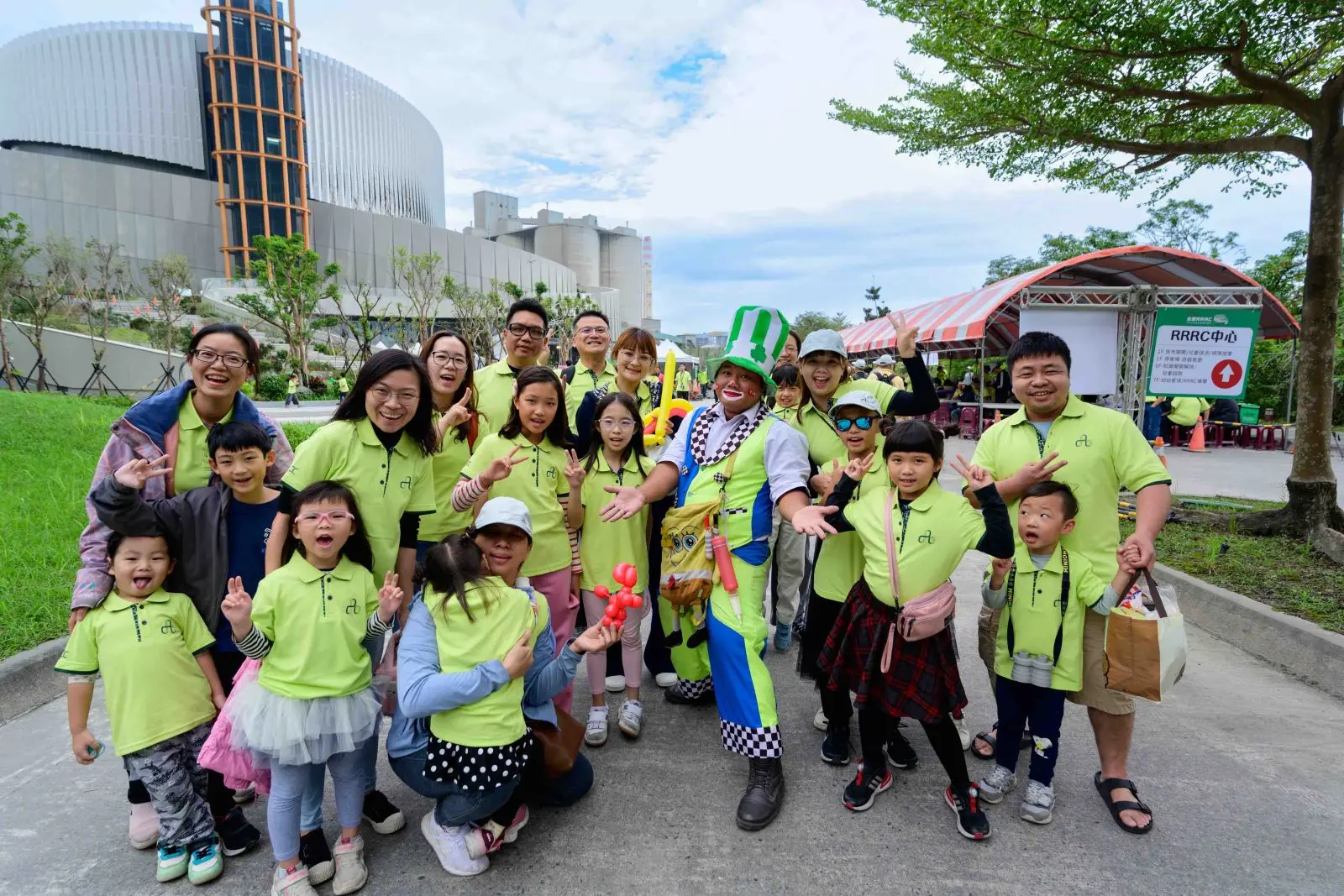
Employees taking part in a health promotion activity at a TCC Group Holdings workplace

Diverse Communication Channels

TCC Group Holdings provides transparent communication channels in the workplace, allowing employees to report issues and receive assistance without delay.

  • Occupational injury and major incident reporting system, with a mobile app under development
  • Grievance mechanism: for suspected occupational illness and for physical or mental harm

Emergency Response and Direct Mitigation Measures

A fire broke out at the Xiaogang plant of Molie Quantum Energy Corporation at 05:04 on July 14, starting in a non-operational area. Firefighters arrived at 05:21. The lithium-ion fire reignited overnight and was extinguished at 08:00 the following day. Fifteen people sustained injuries, most of them minor; two were hospitalized and discharged within four days.

Three days of monitoring by the Ministry of Environment recorded hydrofluoric acid at the fire scene at 09:47 on July 14, attributed to residual electrolyte, which did not spread to surrounding areas. A Kaohsiung City Government release on July 16 confirmed that no toxic gas was present, and three-times-daily testing through July 24 returned normal results. Environmental conditions around the site remained normal throughout.

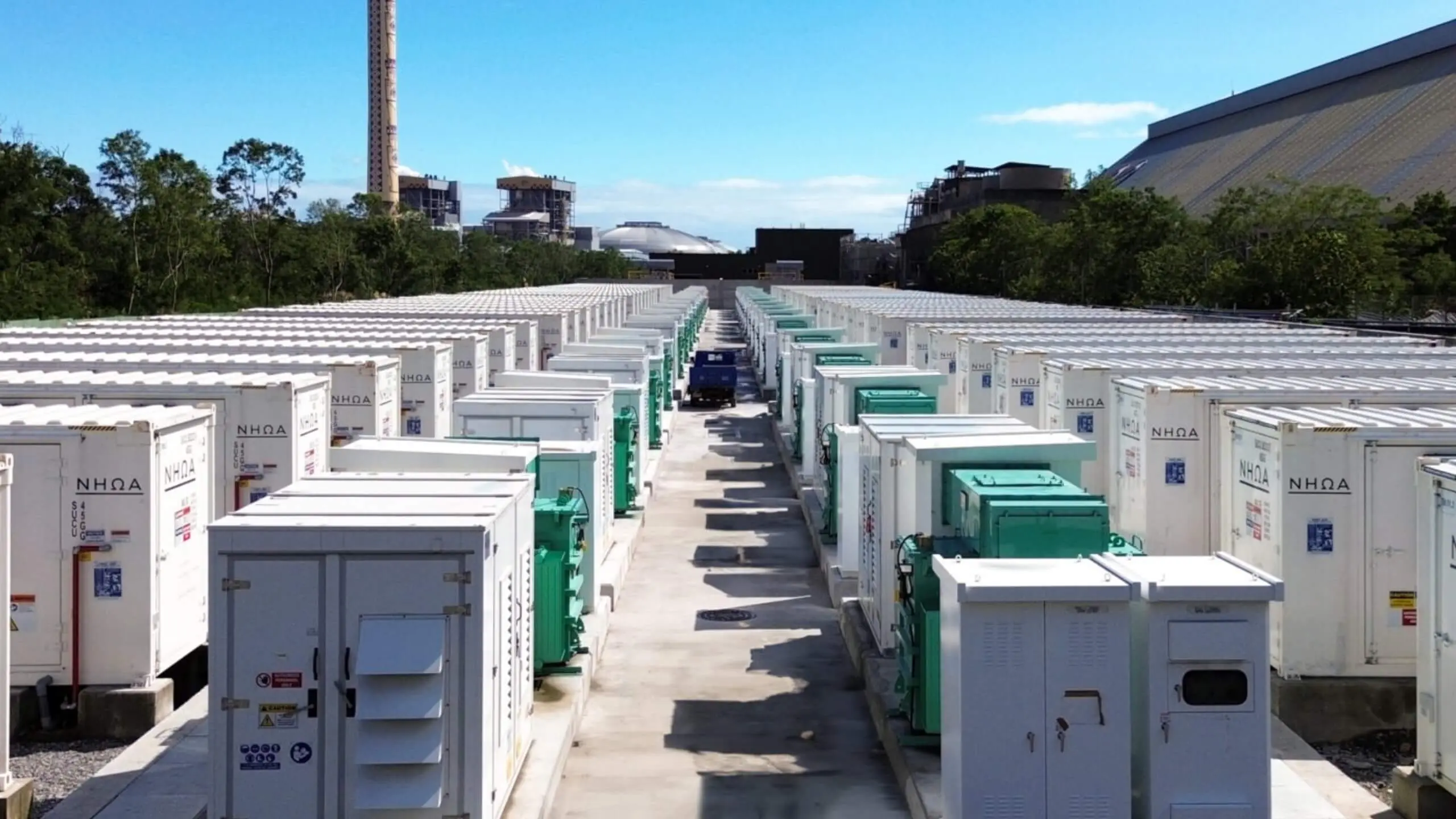
The fire did not affect the UHPC storage cabinets, which have been tested at a surface temperature below 100°C after two hours at 1,000°C and are now powered down. Shortcomings in the immediate evacuation response, including flash explosions and the location of the assembly point, will be addressed. The Chairman of TCC Group Holdings formed a task force to determine accountability under company rules. Once the investigation concludes, restructuring of the plant and a review of management are the stated priorities.

Prevention Measures

  • Processes and mechanisms strengthened. The Xiaogang plant is cooperating with fire and police investigations. Controlled site access has prevented retrieval of the mainframe in the core zone, which delays assessment of any links to operational processes. Suppliers are analyzing malfunctions in the sensors and the multi-stage suppression system. Planned enhancements include AI-assisted early intervention and additional testing for machine suppression, error-proofing and integrity safeguards for the non-conforming product process, and fire and explosion-proof structures in reconstruction, alongside an evaluation of remote and robotic firefighting to reduce human risk. At the sister facility, the Tainan plant of E One Moli Corporation, fire safety for lithium-ion production is being reviewed; its EHS department has increased inspections, inventoried high-risk equipment, and brought forward emergency drills for completion by August 31. Third-party experts have been engaged to review the full optimization process at both the Xiaogang and Tainan plants.
  • Policies strengthened. The Xiaogang plant will revise emergency response procedures and relocate assembly points to increase the safety distance from the facility. Operational protocols will be strengthened in line with the plant's existing ISO 45001 certification, including hardware installed within process areas to serve as firebreaks and prevent escalation. The Environmental, Health and Safety policy will be revised to add requirements such as hazardous chemical labeling, in order to improve transparency for the surrounding community.
  • Training provided. The Xiaogang plant will review and raise the battery plant's safety standards and emergency response mechanisms. Internal firefighting capability will be built through an in-house team, professional training for current staff, and the hiring of firefighting professionals to strengthen the response to new types of fire incidents. A firefighting fund will be established to help neighboring fire departments acquire modern equipment, and cooperation will focus on jointly developing and drilling standard operating procedures for lithium-ion battery fires. The Tainan plant has scheduled internal emergency drills for the third quarter of 2025 covering gas leak and electrical fire scenarios, and its emergency response team will complete additional skills training before September.
  • Operations suspended. In compliance with government requirements, the Xiaogang plant of Molie Quantum Energy Corporation will suspend operations for three months to allow the official investigation into the cause of the fire and the subsequent damage assessment.

Remediation Measures

Firefighting water was contained on site in a 3,700 m³ reservoir and trucked away for off-site treatment to prevent high-pH discharge, in line with regulations. Daily truckloads were reduced from 25 to 15 by July 24 by using gravity pumping, which also avoided motor noise. Air quality was not affected and remains under government monitoring.

Employees continue to receive full pay. A third-party Employee Assistance Program provides free and confidential counseling through a toll-free line in four languages, including Mandarin and English, in three formats. Interest-free loans of up to NT$600,000 are available to staff facing hardship, and town hall meetings provide updates.

On community relations, a senior executive telephoned apologies to 38 community leaders, who serve as borough chiefs. The plant general manager and other managers then visited 13 community leaders and 8 households in person to gather feedback. Measures arising from this include a transparent environmental reporting channel for emergency alerts, a designated stakeholder liaison, and community health seminars for local elderly residents.

On the environment, firefighting water was settled in on-site grit chambers and trucked to Linhai Industrial Park for disposal. All water passed pH and temperature testing and met Ministry of Environment discharge standards, and the incident caused no irreversible harm. Public air monitoring covering carbon monoxide, hydrogen fluoride, particulate matter, and total volatile organic compounds will run monthly for four months, and all data to date is compliant.

The effectiveness of the Employee Assistance Program will be measured by participation and feedback. Safety training and drills are subject to rolling review, and surveys will assess compensation. The human rights and environmental due diligence framework of TCC Group Holdings will be extended to local residents. A local hiring target will be set with input from borough chiefs, using the current local hire rate of 18.6% as the baseline, and a dedicated team is surveying local opinion through visits and calls.

Molie Quantum Energy Corporation maintains close communication with customers and suppliers. Supply chain partners have been informed of the recovery timeline and are cooperating to keep key materials and components in stable supply. Basic customer requirements will be met, although maximum volume is not currently possible.