


TCC80: Reimagining the Role of Business in Shaping Civilization
- Home
- Sustainable E-newsletter
- TCC80: Reimagining the Role of Business in Shaping Civilization
Social 2026 Vol.02
TCC80: Reimagining the Role of Business in Shaping Civilization
- #Shaping the Future Civilization
- #TCC 80th Anniversary
-

-

Share

Shelly Yeh|Vice President and Chief Sustainability Officer of TCC Group Holdings
As one of the organizers of TCC Group Holdings' 80th anniversary program, I was frequently asked the same question throughout the planning process: Why Huashan?
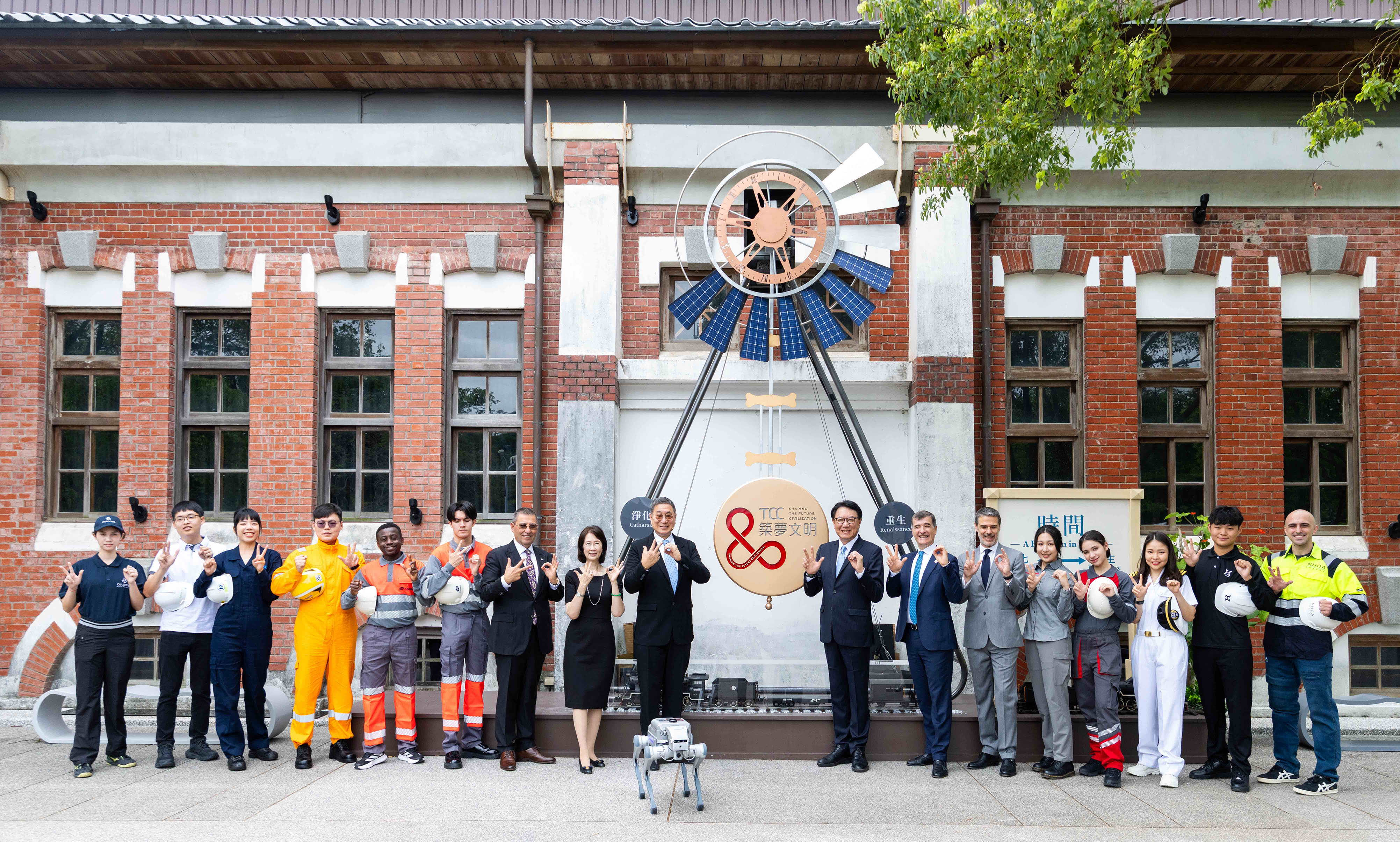
For a company approaching its 80th anniversary, organizing a grand celebration is not difficult. The more challenging question is how to introduce the company to the next generation. As we reflected on TCC's past 80 years and considered the decades ahead, we wanted this milestone to become more than a celebration. We wanted it to create a dialogue about the role businesses play in society and how that role continues to evolve.
Many are unaware that Huashan, besides being a popular cultural hub today, was once a crucial freight transit point. In the 1960s and 70s, TCC's cement was transported through Huashan into Taipei City, contributing to the construction of roads, bridges, and ports. For a company actively pursuing low-carbon transition and globalization, reflecting on the past and looking to the future in a place so deeply connected to its own history carries profound meaning.
One of the most frequently discussed displays featured two seemingly unrelated documents placed side by side: a concrete replica of the Code of Hammurabi and the Paris Agreement.
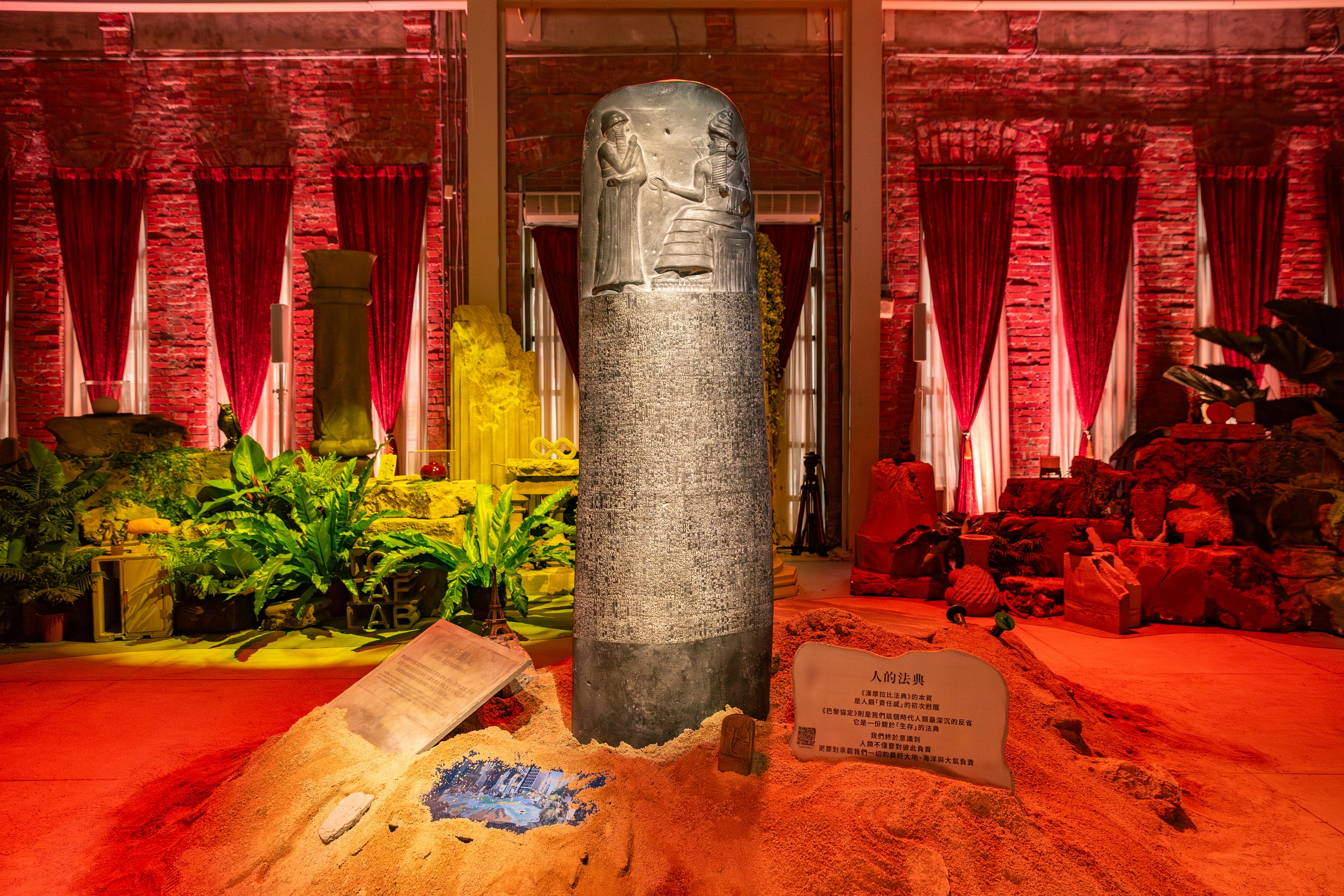
Separated by nearly four thousand years, they represent very different moments in human history. Yet both attempt to answer the same fundamental question: How do societies establish shared rules and consensus to keep civilization moving forward when facing new challenges?
That question also reflects the broader theme behind TCC's 80th anniversary. Eighty years ago, Taiwan's priorities were post-war reconstruction and infrastructure development. Today, the world faces climate change, energy transition, and the shift toward a circular economy. The eras have changed, but every generation must respond to the defining issues of its time.
Throughout the anniversary program, TCC Chairman Nelson Chang frequently spoke about "building civilization." The concept is not abstract. It refers to the foundational conditions that enable societies to function and prosper: from transportation networks and housing to stable energy systems, industrial production, and waste management. These systems, often taken for granted, are the crucial bedrock for civilization's continuous development. Viewed through that lens, whether it was the cement industry participating in Taiwan's infrastructure projects 80 years ago, or today's investments in low-carbon building materials, energy storage, charging networks, and energy transition, TCC's core focus has always been responding to society's evolving needs for building civilization.
Another feature that attracted considerable attention was the visual centerpiece of the exhibition: the ancient Greek theatre at Taormina. For many visitors, it is a famous tourist attraction; but for TCC, it symbolizes the enduring role of concrete materials and engineering technology in the development of human civilization. From Roman construction techniques to today's low-carbon materials, renewable energy, and AI-era infrastructure, human progress has always depended on the accumulation of materials, energy, and engineering capabilities.
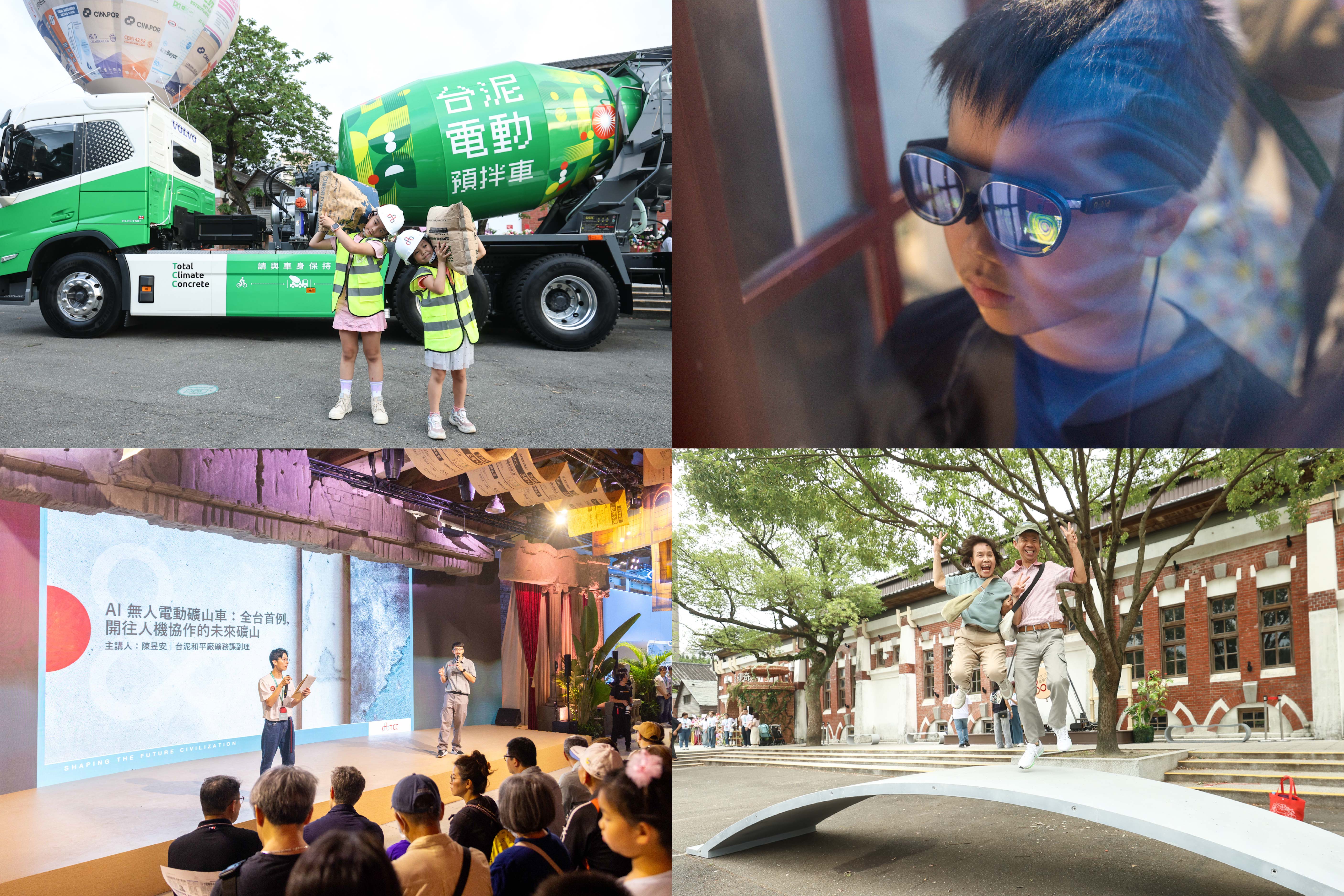
Therefore, at the 80th-anniversary exhibition, we sought to make industrial innovation more accessible to the public in their own ways. Visitors wore industrial AR glasses to see how digital technology enters the industrial field; some interacted with robotic dogs up close for the first time; others were amazed to learn that TCC has deployed AI autonomous electric mining trucks at high-altitude quarries. Families happily took photos with electric ready-mix concrete trucks, and many walked across an arch bridge built with Ultra-High Performance Concrete (UHPC) to experience its remarkably thin yet sturdy structural design. In the "Civilization Talks" corner, people from various backgrounds had the opportunity to engage directly with TCC's frontline engineers and technical teams. From green energy and low-carbon materials to energy transition, many understood the ongoing industrial transformation from an engineering perspective for the first time.
If the exhibition represented TCC's reflections on the past and future, the anniversary film highlighted the people underpinning these changes.
Using AI technology, precious historical black-and-white photographs were brought to life. From post-war reconstruction and major infrastructure projects to cement plants, quarries, and ports, generations of TCC people seemingly appeared before our eyes once more.
And when the scene shifted to the present, it was no longer just colleagues from Taiwan on stage. From senior executives with over 54 years of service to young partners who just joined the company; from representatives of different business units in Taiwan, Europe, and Africa; from a single local enterprise to an international corporate group with employees of 58 nationalities—these seemingly different backgrounds and generations form today's TCC. For an 80-year-old company, what is most remarkable is perhaps not merely having survived eight decades, but that after 80 years, people from diverse generations and cultural backgrounds are still willing to join hands for the next phase of the journey.
Over the past eight decades, TCC has participated in Taiwan's construction and development. Looking ahead, we are stepping into more corners of the world across Asia, Europe, and Africa to participate in low-carbon development and energy transition. Perhaps the most important legacy TCC's 80th anniversary hopes to leave is not a celebration, but a question worth pondering: How should we evaluate the value of a company after 80 years? Is it defined by the amount of products it manufactures or the revenue it generates? Or is it defined by its ability to continuously respond to society's needs at the turning points of different eras?

AUTHOR

Shelly Yeh|
Vice President and Chief Sustainability Officer of TCC Group Holdings
From the newsroom to the industrial frontlines, exploring new possibilities for sustainability.
You may also like
-
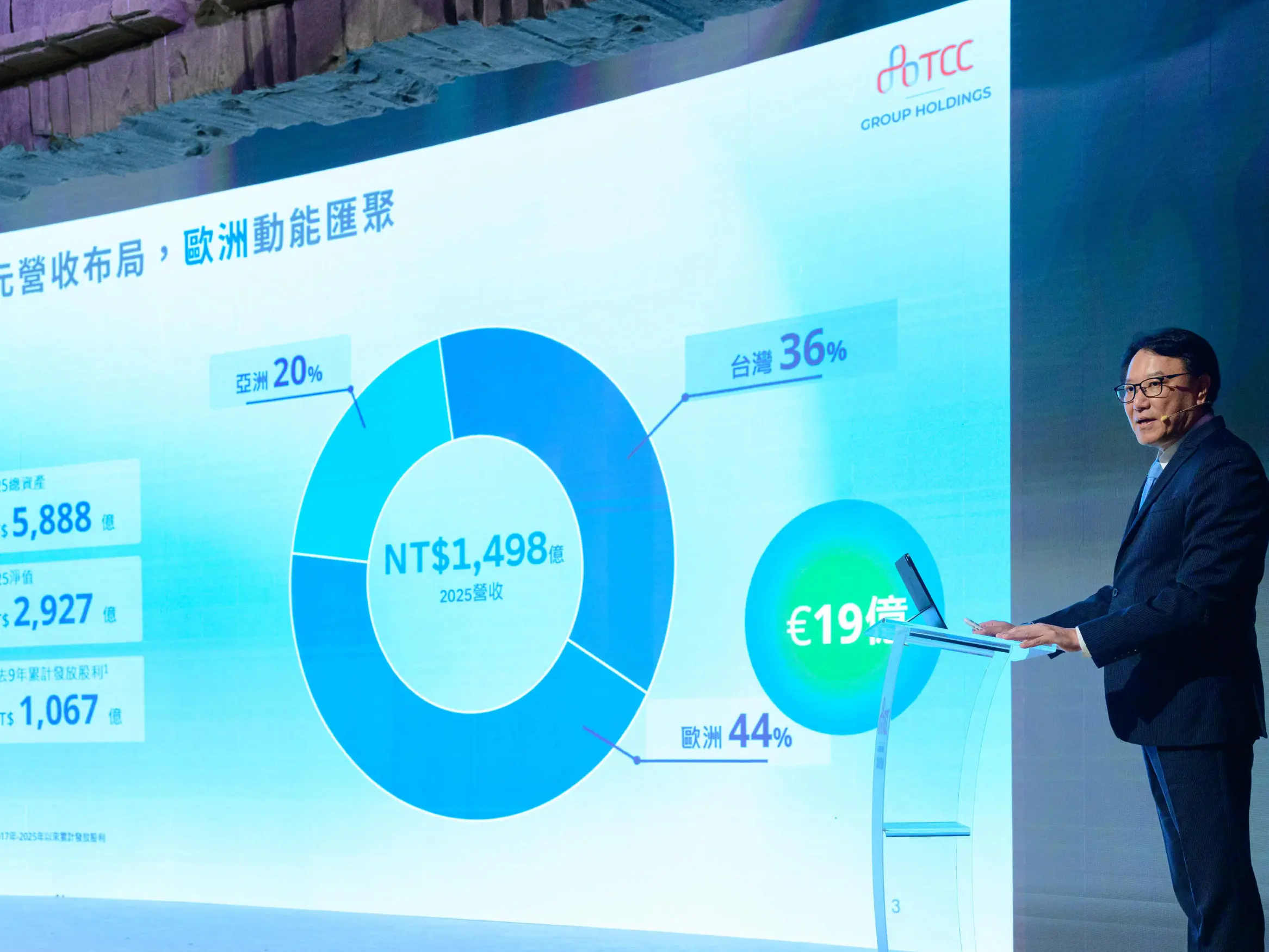 Governance 2026 Vol.02 Europe Reaches 42% of Revenue! TCC Explores Listing on Four Major European Capital Markets
 -
 Social 2026 Vol.02 How OYAK Cement Reduced Lost - Time Injuries by 58% Through Leadership and Behavioural Safety
 -
 Environmental 2026 Vol.02 TCC's Hoping EcoPort Obtains OECMs Certification: The Only Industrial Port in Taiwan to be Selected
 -
 Environmental 2026 Vol.02 TCC Promotes Green Transport, Employee Transition and Human-Machine Collaboration
 -
 Social 2026 Vol.02 Pedaling 888km: TCC's 80th Anniversary Low-Carbon Cycling Tour
TCC GROUP HOLDINGS
SUSTAINABLE E-NEWSLETTER.