


TCC Advances Calcined Clay and Calls for Global Industry Cooperation at COP31
TCC Advances Calcined Clay and Calls for Global Industry Cooperation at COP31
2026.11.16
-
Copied
CIMPOR targets 1.5Mt of annual calcined clay capacity across Africa and Europe by the end of 2026
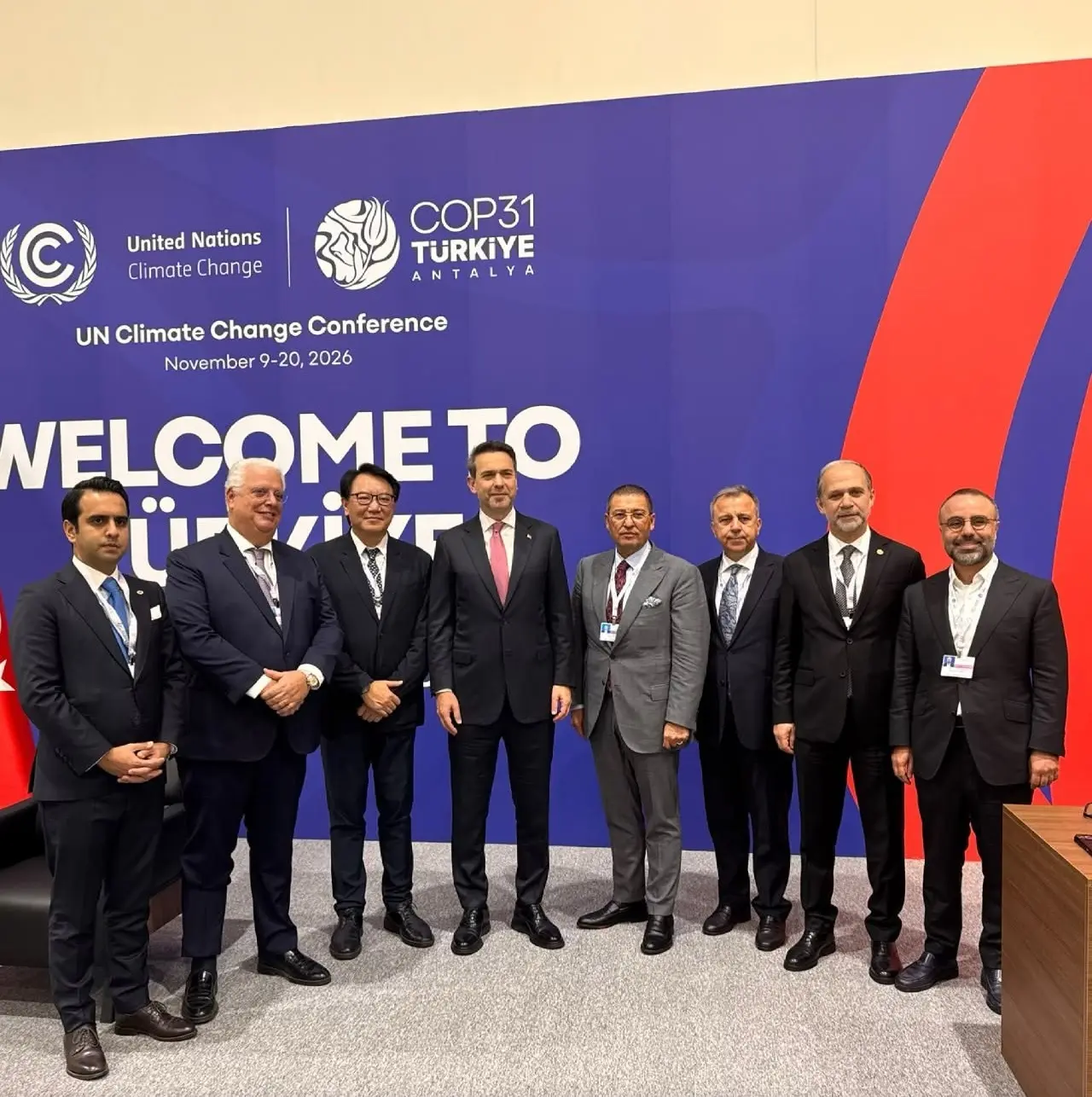
At the COP31 on November 13, TCC Group Holdings called for the establishment of a global Calcined Clay Transition Alliance, inviting cement producers worldwide to accelerate the large-scale adoption of low-carbon cement. TCC’s participation also addressed materials innovation, durability, circularity and the investment conditions needed for industrial decarbonization.
TCC’s family member CIMPOR expects the annual calcined clay production capacity across Africa and Europe to reach 1.5Mt by the end of 2026. This could support approximately 5Mt of low-carbon blended cement production annually and reduce CO₂ emissions by up to an estimated 1.2Mt annually.
From Industrial Experience to Global Cooperation
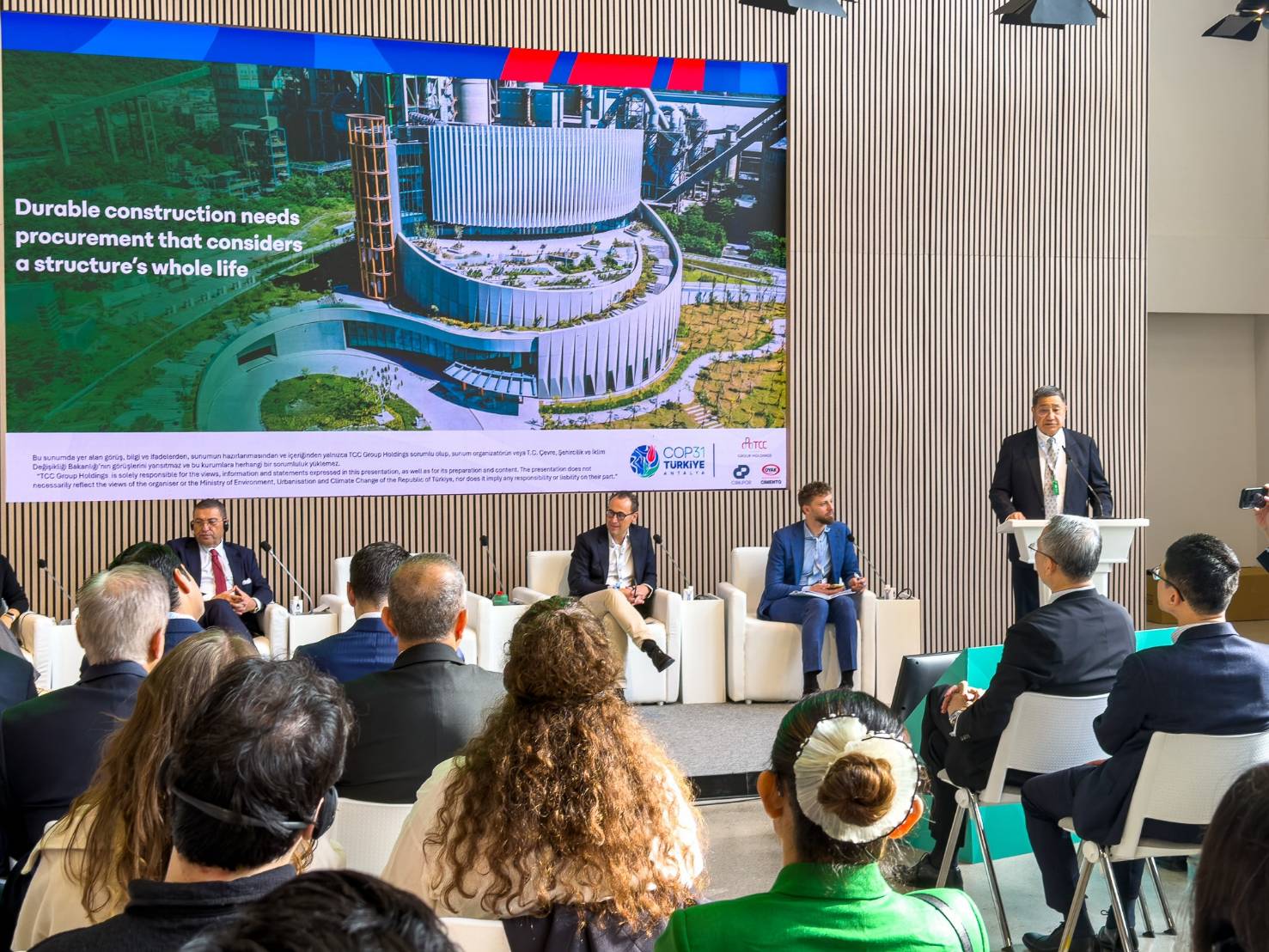
During the calcined clay forum at COP31, Suat Çalbıyık, Chairman of the Board of CIMPOR Global Holdings and OYAK Cement, both part of TCC Group Holdings, explained that the Group has brought its experience in industrializing calcined clay production in Côte d’Ivoire, Cameroon and Ghana to Portugal. He highlighted opportunities for closer cooperation among cement producers worldwide, including a potential Calcined Clay Transition Alliance within the GCCA framework. The forum also brought together perspectives from the GCCA and Anne Dekeukelaere of the Swiss Federal Institute of Technology Lausanne (EPFL), highlighting clinker reduction, product standards and green procurement as enablers of low-carbon cement adoption. Limestone calcined clay cement (LC3) can reduce CO₂ emissions by approximately 40% in its classic formulation compared with conventional Portland cement, while offering good durability and resistance to aggressive environments. Research is also expanding into low-carbon concrete blocks and precast building materials.
A Cement Renaissance at COP31
Speaking on “The Cement Renaissance,” TCC Chairman An-Ping Nelson Chang said now is the time for the cement industry to write a new chapter in its history. Future competitiveness would no longer depend solely on production volumes and costs, but on reducing materials’ carbon emissions, extending service life and promoting circularity. Drawing on more than 10,000 years of building civilization in Anatolia, the region encompassing COP31’s host city of Antalya, Türkiye, Chang noted that modern cement has supported modern civilization throughout its history of just over 200 years and must assume the corresponding environmental responsibility. “We live under the same atmosphere, but the ground beneath our feet is not exactly the same,” he said. Different regions possess different clays, natural pozzolans and recyclable building materials. Decarbonization pathways should therefore reflect local resources, drawing on materials science and scientific validation to ensure quality.
Chang emphasized that bringing low-carbon building materials into the market requires architects, engineers, standards bodies and governments to participate alongside manufacturers. Recognition of innovative materials in standards and consideration of buildings’ full life cycles in procurement decisions could help redirect industry investment and market choices.
Carbon Pricing and Financing for Decarbonization
At the COP31 forum “Carbon Has a Price—Who Finances the Transition?”, TCC President Roman Cheng addressed the investment conditions needed for industrial decarbonization. He noted that the gradual phase-out of free allowances under the EU Emissions Trading System (EU ETS), together with the advancement of the Carbon Border Adjustment Mechanism (CBAM), is bringing increasingly clear carbon costs to Europe’s cement industry. However, carbon pricing, emissions verification and transition finance systems remain uneven across markets. Cheng warned that without reasonably priced financing for decarbonization investments, production and investment could shift to regions with lower carbon costs, relocating emissions rather than reducing them. Carbon pricing alone would not automatically generate industrial investment, he said. Predictable policies, reliable emissions verification, and appropriate financing and risk-sharing mechanisms are needed to prevent regional carbon policies from shifting production and emissions elsewhere and to support the industry’s low-carbon transition.
More Related Information
-
 2026.11.06TCC Group Holdings Joins COP31 with CIMPOR and OYAK Cement to Showcase Low-Carbon Construction and Energy Innovation
-
 2026.09.21Cement-Inspired Style Hits the Streets: TCC Unveils Limited-Edition White Crossbody Bag for Extraordinary Shareholders' Meeting
-
 2026.09.04Ta-Ho Maritime Corporation Awarded ISO 50001 Certification Aligning Fleet Energy Management with International Standards