

TCC Chairman Sees UK as Leading Option for Planned European Cement Business Listing
TCC Chairman Sees UK as Leading Option for Planned European Cement Business Listing
2026.11.25
-
Copied
Proposed acquisition of Ukraine' s IFCEM would support TCC' s long-term expansion in Eastern Europe' s building materials market.
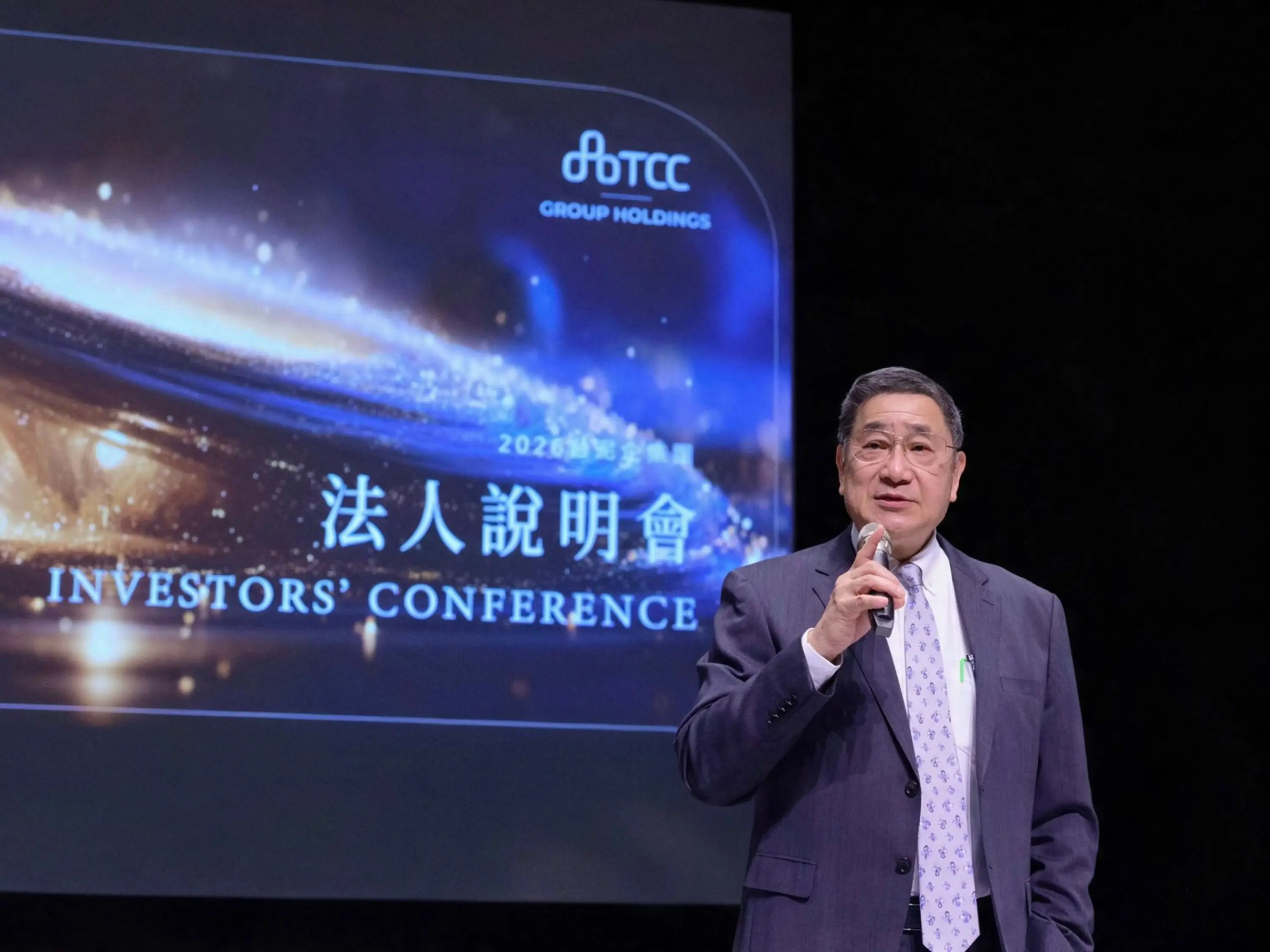
At TCC Group Holdings' investor conference today, Chairman Nelson Chang indicated for the first time that the United Kingdom currently appears to be the most likely venue for the planned listing of TCC' s European cement business.
Discussing the proposed acquisition of Ukrainian cement producer IFCEM, Chang said he had visited the plant and was impressed by its production processes, energy efficiency, raw material quality and level of automation. In his assessment, the facility would rank among the top 10% of TCC' s cement plants worldwide once the transaction is completed.
TCC President Roman Cheng said the company' s assessment focuses on IFCEM' s existing operations, regional market position and cost competitiveness. IFCEM has continued to operate normally, generating verifiable revenue and earnings and maintaining healthy cash flow. Cheng said the acquisition would position TCC to serve long-term infrastructure demand, respond to the next cycle in the cement market and take part in reconstruction as opportunities emerge.
Expanding TCC' s Presence in Eastern Europe
TCC' s European cement business has historically focused on Western Europe, serving France, the UK, Portugal and parts of Spain. Four years ago, TCC established a presence in Romania to gain a better understanding of Central and Eastern European markets. Through its sales in Romania, TCC has gradually built its knowledge of the region, where Chang sees long-term growth potential.
IFCEM operates Ukraine' s second-largest cement plant, located in the west of the country, with an annual cement production capacity of 5.2 million tonnes. The modern, integrated building materials complex has ample limestone reserves, along with deposits of chalk and gypsum. It operates production lines for cement, precast panels, gypsum board and dry-mix mortar.
Chang said IFCEM' s chalk deposits could support the development of white cement, which would require a dedicated production line. He noted that white cement can cost roughly as much to produce as conventional cement and sell for around €200 to €250 per tonne, offering scope for higher margins. Chang also said Ukraine' s domestic cement output currently supports consumption of around 130 kilograms per person. In his view, that level falls short of basic demand even before reconstruction needs are taken into account.
Should the acquisition be completed, Chang said he would favour reinvesting IFCEM' s cash flow in Ukraine to strengthen its operations, develop a wider range of building materials and support TCC' s expansion in Eastern Europe. He said a broader building materials portfolio could create greater added value in Ukraine, Taiwan and other markets, with IFCEM able to contribute technical expertise in certain areas.
The Outlook for Low-Carbon Cement in Europe
Chang said the carbon price under the EU Emissions Trading System (EU ETS) was around €89 per tonne of CO₂ and could reach approximately €150 by 2034, in his assessment. As free allowances are phased out, a producer emitting 800 kilograms of CO₂ per tonne of cement could face a carbon cost of around €120 per tonne of cement at that price, potentially exceeding current cement selling prices.
Chang noted that Europe relies on imports from markets including North Africa and Türkiye to supplement domestic cement supply. He expects lower-carbon cement producers to be better positioned to compete as the EU implements its Carbon Border Adjustment Mechanism (CBAM). TCC’s first commercial-scale calcined clay cement plant in Europe is scheduled to begin production in Portugal in December 2026. In Chang’s view, prevailing European carbon prices could already support reasonable margins for the plant' s products.
Cheng added that Türkiye and Ukraine maintain close trade and economic ties with the EU. TCC' s actual emissions in Türkiye are well below the EU' s default values, and the company expects to obtain EU-recognised emissions verification by the end of 2026. Subject to completion of the acquisition, TCC plans to help IFCEM obtain emissions verification as soon as practicable to strengthen its competitiveness in the EU market.
More Related Information
-
 2026.11.16TCC Advances Calcined Clay and Calls for Global Industry Cooperation at COP31
-
 2026.11.06TCC Group Holdings Joins COP31 with CIMPOR and OYAK Cement to Showcase Low-Carbon Construction and Energy Innovation
-
 2026.09.21Cement-Inspired Style Hits the Streets: TCC Unveils Limited-Edition White Crossbody Bag for Extraordinary Shareholders' Meeting