

TCC Q1 Gross, Operating, and Net Margins All Rise Europe Reaches 42% of Revenue TCC's Global Landholdings Double, Book Value Rises to 1.6x at NT$66.3 Billion
TCC Q1 Gross, Operating, and Net Margins All Rise Europe Reaches 42% of Revenue TCC's Global Landholdings Double, Book Value Rises to 1.6x at NT$66.3 Billion
2026.05.22
-
Copied
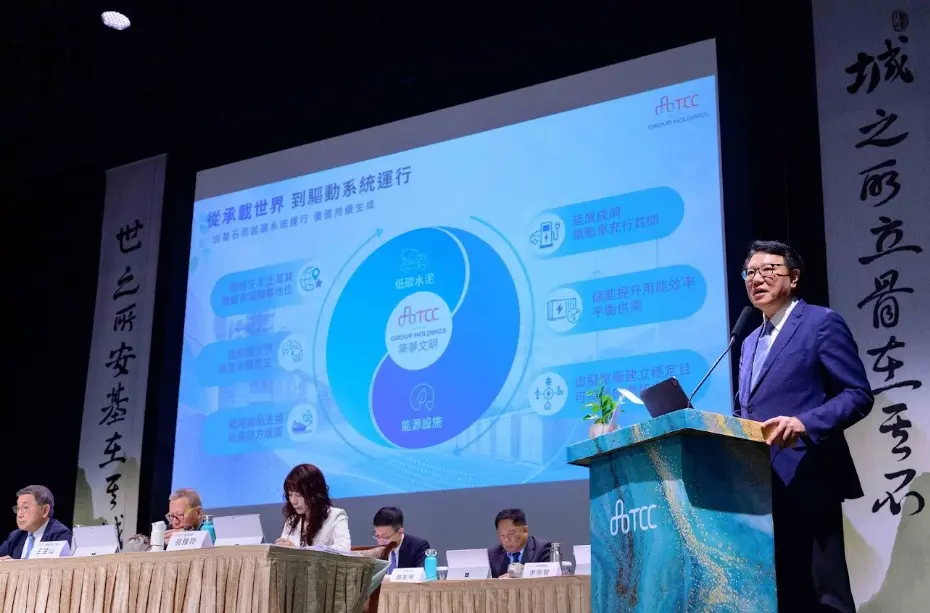
At its Annual General Meeting held today (May 22), TCC reported a marked rebound in Q1 2026 earnings. Consolidated revenue reached NT$33.2 billion, with gross profit of NT$6.2 billion (up 5% YoY), operating income of NT$2.8 billion (up 21% YoY), and net income after tax of NT$1.2 billion (up 57% YoY). Net income attributable to the parent company reached NT$700 million, a 36% increase that ran counter to broader industry headwinds.
Addressing investor concerns over valuation, President Roman Cheng presented a cross-market comparison of price-to-book (P/B) ratios among cement peers listed in Taiwan, Mainland China, and Europe. Since the start of 2025, the average P/B ratio has stood at 0.46x for Mainland-listed peers and 0.82x for Taiwan-listed peers — with TCC trading roughly 0.03 to 0.04x above its local peer average — while European-listed peers averaged 1.64x. This disparity, he noted, supports TCC's pivot toward Europe: a capital market that more readily recognizes the value of low-carbon and green-energy capabilities.
Responding to shareholder questions about whether a European listing would disadvantage Taiwan-based shareholders — and to one light-hearted suggestion that TCC reclassify itself as an "AI stock" — President Roman Cheng urged the room to "face reality." Corporate growth, he stressed, requires capital: enlarging the pie is what ultimately rewards shareholders. Raising capital domestically at today's depressed share price would dilute existing shareholders' equity, while relying solely on additional borrowing would put pressure on TCC's credit ratings. A European listing, by contrast, brings in fresh international capital — avoiding dilution while advancing the Company's internationalization strategy. Chairman Nelson Chang's frequent travel to Europe in recent months reflects precisely this effort: securing the Company's next phase of growth on behalf of its shareholders.
President Roman Cheng pressed the point: under Taiwan's depressed share price, would shareholders rather see their equity diluted further, or watch the Company take on more debt? Growth requires capital, and expanding the business benefits every shareholder. The greater risk, in his view, is sitting out the global transition to an era in which carbon, electricity, and computing power all have monetary value. He disclosed that CIMPOR, TCC's Portuguese subsidiary, has accumulated carbon allowances peaking at nearly 2.4 million tonnes, earned through emissions reductions that exceeded regulatory requirements. "What is the value of 2.4 million tonnes multiplied by €70?" Cheng remarked. "But the Chairman has directed that, even though these allowances carry a market price, we recognize them neither on the balance sheet nor in the income statement. We apply the principle of conservatism, and disclose them in the notes."
For the first time, President Roman Cheng also disclosed the substantial underlying value of TCC's revalued assets and landholdings. Following the integration of OYAK and CIMPOR in 2024, the Group's global physical asset base has expanded markedly: total land area has more than doubled from 19 million square meters to 39.8 million square meters. Land is carried at historical cost under the principle of conservatism; even after a modest divestment of non-core parcels last year, the book value rose to 1.6 times its 2023 level, reaching NT$66.3 billion in 2025 from NT$42.3 billion in 2023. Taiwan's share of the total has fallen from 70% to 44%.
TCC has decisively moved beyond single-market dependence to become a genuinely multinational group, President Roman Cheng noted. According to the latest Q1 2026 figures, Europe now accounts for 42% of Group revenue — surpassing Taiwan at 38% — while Mainland China's share has fallen below 20% (Mainland China 19.47%, Hong Kong 0.1%). Revenue at the European subsidiary holding company reached €1.9 billion, formally establishing Europe as TCC's principal engine of profit and growth.
In Turkey, TCC operates 24 million tonnes of cement capacity, holding a 16% market share at 80% capacity utilization — well positioned to serve future reconstruction demand across neighboring Central Asia and Eastern Europe. In Portugal, TCC operates an annual capacity of 11.2 million tonnes and commands approximately 52% of the market, currently running at around 50% utilization. Building on Europe's low-carbon transition, the Group has begun entering the low-carbon cement markets in the UK and France. President Roman Cheng further revealed that TCC is carefully evaluating one to two additional investment opportunities in Europe offering strong strategic complementarity, with the aim of further deepening the Group's European footprint.
In the new-energy business, TCC's Atlante integrated platform has deployed more than 1,000 fast-charging stations and 4,000 charging points across Southern Europe and Switzerland. Its EnergyArk® energy-storage and charging product has secured over 331 contracts with leading retail and commercial property groups across France, Portugal, and Italy, while the global NHOA energy platform has accumulated nearly 5,000 MWh of operational and under-construction capacity. To capture the green-logistics opportunity, Atlante has formally entered the heavy-duty vehicle (HDV) fast-charging market, providing end-to-end Scope 3 decarbonization solutions for fleet operators. The Group has signed agreements to develop three strategic charging stations along the Alpine cross-border corridor — at Colle della Maddalena, Simplon Pass, and Aprica Pass — covering the principal arteries of Italy–France and Italy–Switzerland heavy-duty freight logistics in Western Europe. Together, these initiatives accelerate TCC's two-pillar strategy: evolving from a cement manufacturer into a developer of new-energy technology.
More Related Information
-
 2026.05.04TCC Signs Dual Partnerships to Advance Low-Carbon Urban Renewal with PUJEN and Deploy 200 EnergyArk Systems with RiTWIN
 -
 2026.05.04TCC Taps Global Banks to Explore European Listing; Chairman Nelson Chang: The Future Lies in Materials and Energy
 -
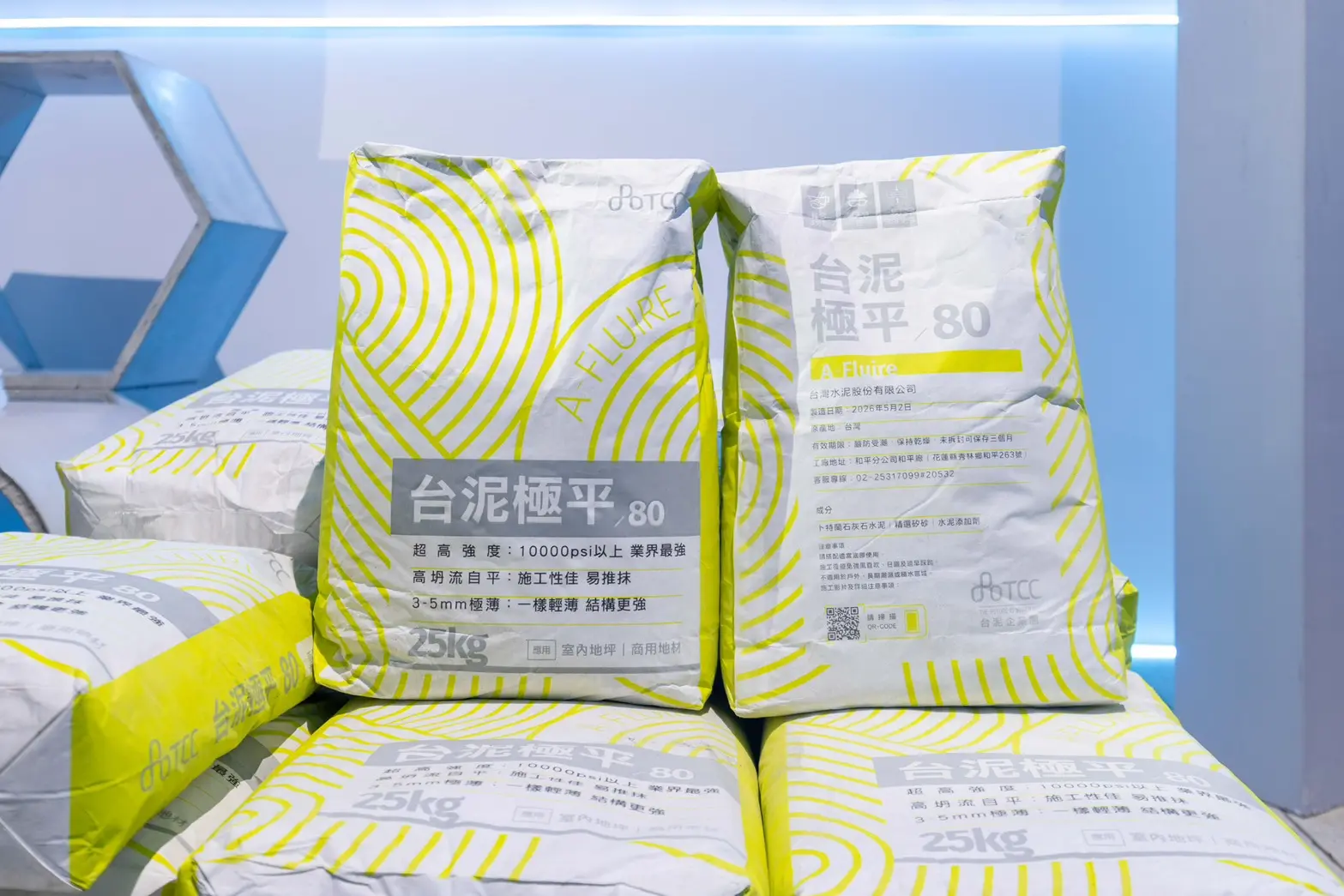 2026.05.02TCC Launches World's Strongest 10,000 psi "A-Fluire" Mortar for AI & Semiconductor Facilities; Turkey 3D Solar Homes Named COP31 Green Project